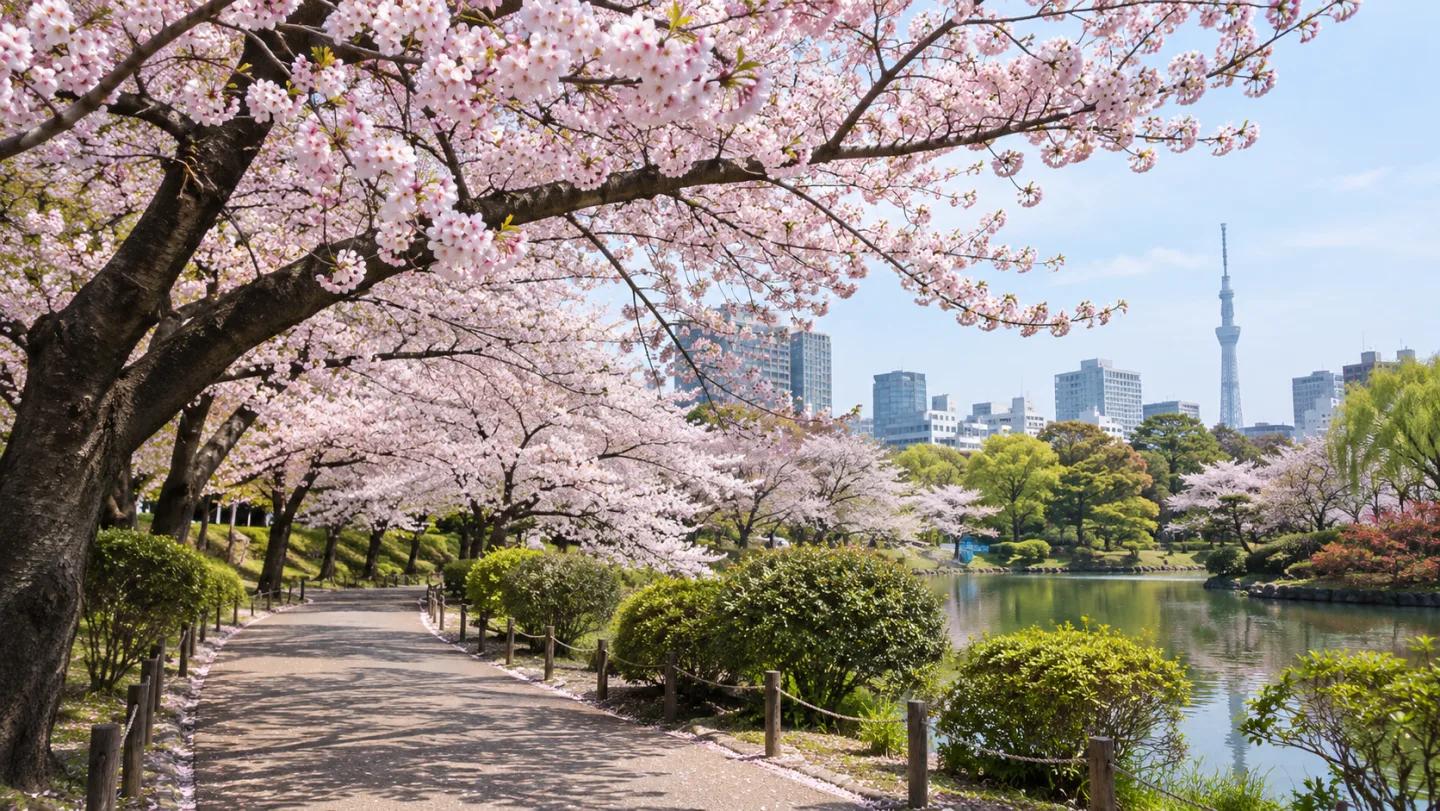
Tokyo in cherry blossom season: Choosing your dates and itinerary
The hardest part of visiting Tokyo for the cherry blossoms is choosing the exact dates. Weather affects the start and peak of flowering, and the trees do not all blossom at once across the city. Start by comparing flights over a range of days. If every date in your trip revolves around one viewing and nothing can move, you will have no room to adjust even slightly once you arrive.
Choosing your dates
The Japan National Tourism Organization forecast is a good starting point. Check the year on the page: last season’s figures are not next year’s forecast. Do not confuse the estimated dates for first bloom and full bloom. The opening of the first buds and a canopy entirely in flower are different stages. Treat neither date as a promise. Wind and rain can quickly strip blossoms that have already opened.
If you can choose just one week, start by comparing flights for late March and early April, then look for alternatives based on different tree varieties. In Shinjuku Gyoen, some varieties flower earlier and others later. If travelling later in spring, do not rule out the garden just because of one citywide forecast. Read official information alongside the descriptions of individual varieties. You will get a better idea of what you might see during your stay.
Three places for three different days
Ueno Park is a good option if you want to combine cherry blossoms with a museum visit. Arriving early can make for a quieter walk. Check the museum’s open days and any special exhibition requirements separately. When the park is busiest around midday, you can go indoors and return later. Count your walking time from when you leave the train, allowing a few minutes to enter the park and get your bearings.
Treat Shinjuku Gyoen as a half-day outing. Choose an entrance based on your metro stop and what you plan to do next. Do not think of the garden as one sight: after seeing one area, use your remaining time to look for other varieties. Check admission rules, opening days and ticket arrangements before the season. If dinner is in another neighbourhood, mark the exit that will make getting back to the station easiest.
The Meguro River offers a different walk. Unlike the garden’s wide paths, stretches beside the water are narrower. Mornings or a quieter weekday work well if you want bridge views without waiting in long queues. In heavy rain, switch to a museum in Shinjuku or Ueno. Visiting two places at different times also gives you different natural light for photographs.
Flights, hotels and room for flexibility
When looking for Tokyo flights, treat Haneda and Narita as separate airports. Factor travel into town, possible extra costs for late arrivals and hotel check-in time into your comparison. For a one-stop itinerary, check the connecting airport as well. Journey duration matters particularly when you only have a few days and lose the first to long travel.
Ask one practical question about your hotel: how easy is it to reach the neighbourhoods you may switch between as the weather changes? Time from the door to the station and the number of changes can tell you more than a famous address. Keep one full day open. If bloom is late, use the time for the city’s culture: a museum, an old shopping street or your own neighbourhood. A flexible plan lets you get a feel for Tokyo and still see the blossoms when conditions are right.
Leave distant parks off your departure day. Arrange luggage storage and when to set out for the airport in advance. Give yourself permission to spend the last morning in a familiar area and revisit the spot you enjoyed most.
For Ueno, keep separate plans for the park and the museum. If the blossoms draw a crowd, choose a meeting point nearby and share it with everyone ahead of time.
Check the Japan National Tourism Organization forecast, the guide to Shinjuku Gyoen and the guide to Ueno Park. Compare flights with FlyGE’s flight search.
The cover illustration was generated using artificial intelligence.
Related Posts
Strasbourg Christmas markets: how to get there by train
Find the Strasbourg Christmas market dates, compare trains from Paris and plan two days in the Alsatian capital.
Keukenhof in spring: How to reach the tulip garden from Schiphol Airport
Plan your spring trip from Schiphol to Keukenhof, from the garden’s opening dates and bus options to luggage and the journey back.
Madeira or Tenerife: choosing a winter island
Compare Madeira’s walking trails with Tenerife’s coast and plan your transfers and weather-dependent days.
